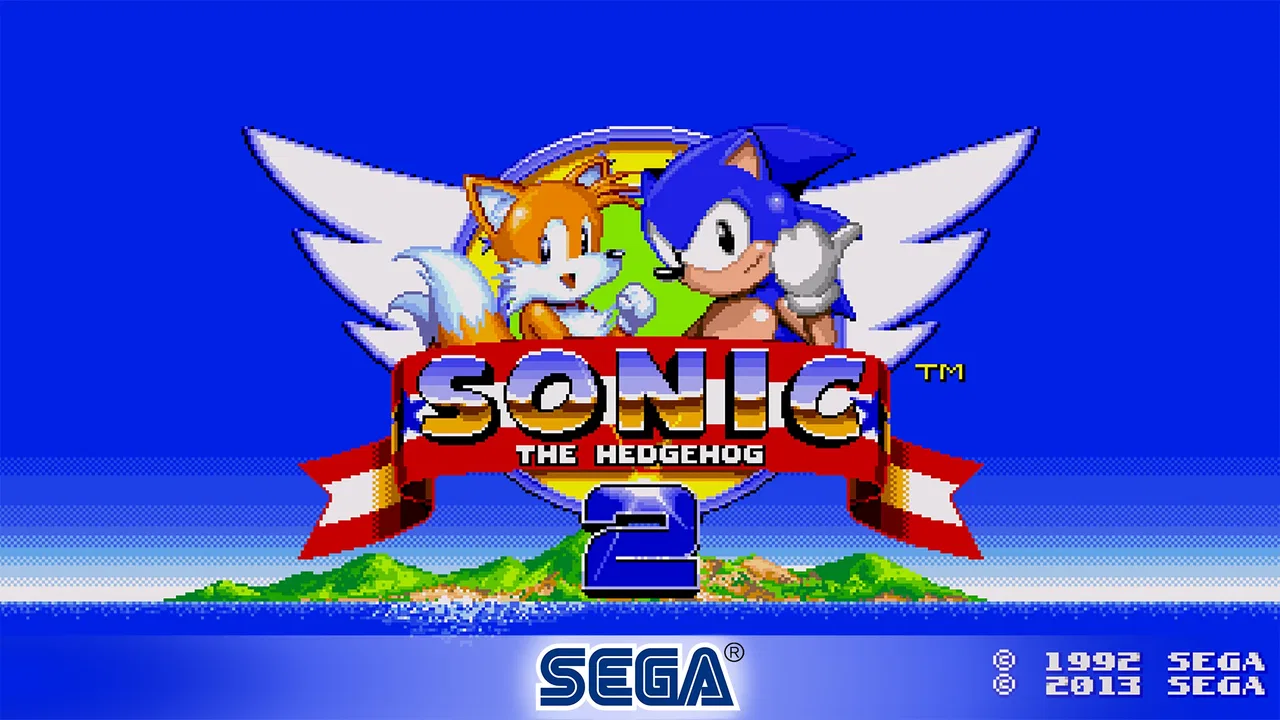
Sonic The Hedgehog 2 Classic
- 4.2
- Rating
- 50.00M
- Installs
- Free
- Price

 Analysis by App-foxy
I spent time with Sonic The Hedgehog 2 Classic as a compact arcade game, and my first impression was that it works best when treated as a focused burst of old-school platforming rather than a modern all-purpose mobile game. It is free to download, made by SEGA, and built around Sonic’s speedy movement, familiar characters, and short attempts that are easy to start when I only have a few minutes. The game is aimed at Everyone, so it is approachable for younger players while still offering enough precision and replay value for longtime fans.
What makes this version interesting is the balance between instant familiarity and the awkward realities of playing a fast platformer on a touchscreen. The levels encourage momentum, exploration, and quick reactions, but a phone display cannot provide the same tactile certainty as a physical controller. I enjoyed it most when I stopped trying to rush every section and learned to use Sonic’s movement deliberately. That small change in attitude turns it from a nostalgic curiosity into a game I could genuinely return to.
How the current mobile version feels to play
The current release is version 2.0.6, and it remains a straightforward arcade experience rather than a sprawling mobile package. The basic appeal is immediate: move through colorful stages, build speed, collect rings, avoid hazards, and reach the end without losing control. Sonic’s acceleration gives ordinary movement a satisfying rhythm, but it also means that careless inputs can send me into an enemy or a pit before I have time to correct myself.
You May Also Like

 Blood Strike: 2.5 Anniversary
Blood Strike’s Loadouts Turn Every Drop Into a Tactical Gamble
A close look at Blood Strike’s custom loadouts: how fast access to signature weapons reshapes its battle royale rhythm, rewards preparation, and narrows the gap between fights.

 Pandora - Music & Podcasts
Pandora’s Music Is Easy to Start, but Harder to Recover
Pandora’s strength is its low-effort path from a seed to a station. Its weak spot is how much confidence it asks you to place in connection, setup, and quiet recovery.

 8 Ball Pool
 Is Built on Rivalries, Rematches, and Routine
A close look at the rivalries, rematches, shared routines, and unanswered safety questions that turn a quick pool match into a persistent mobile community.

 Samsung Music
’s Quiet Strength Is Playing What You Already Own
Its reach comes less from spectacle than from dependable access to a personal library. That simplicity is both the app’s strongest retention engine and its ceiling.

 AccuWeather: Weather Radar
AccuWeather Review: A Quick, Clear Forecast for Everyday Decisions
For everyday plans, the best forecast is the one you can understand quickly. AccuWeather makes rain timing, radar, and local conditions easy to act on, with a few trade-offs.

 Hill Climb Racing
Why Hill Climb Racing Still Turns Crashes Into One More Run
A tiny car, a bumpy hill and one more upgrade: Hill Climb Racing keeps resurfacing because its simple chaos makes every near-miss feel personal.
More From Our News Desk



I found the opening moments easy to understand, even without revisiting the series for years. The game communicates its priorities through play rather than long explanations. Wide spaces invite speed, slopes create momentum, and branching routes reward players who are willing to slow down and look around. That contrast is important. The fastest route is not always the safest route, and a player who treats every screen as a race can miss the reason these stages remain memorable.
The arcade category suits it well because the game is built around repeatable runs. I can play one section during a short break, stop, and come back later without needing to remember a complicated story or resource system. It is also a good choice for passing a phone between family members. One person can attempt a stage, another can try to beat the result, and neither needs a long explanation before starting.
The touchscreen controls are the main point of adjustment. Sonic responds quickly, which is welcome, but fast movement magnifies every imprecise press. I had better results holding the phone firmly, keeping my thumb close to the virtual controls, and avoiding unnecessary swipes or frantic corrections. On a smaller screen, my hand sometimes covered part of the action, so a slightly wider display made the game more comfortable. Players who already dislike virtual buttons may prefer a controller-based alternative in this category.
Why the level design still rewards patience
The clever part of Sonic’s design is that speed is only one tool. Some stretches clearly encourage a rapid run, while others punish blind acceleration with enemies, gaps, or awkward landings. I started enjoying the game more when I separated those moments: build speed where the path is open, then release the urge to sprint when the environment becomes less predictable.
A useful habit is to treat rings as both protection and information. Keeping a healthy supply gives me room to survive a mistake, but collecting them also encourages me to inspect alternate paths. If I lose them, I become much more vulnerable, and the next error can end the attempt. That creates a simple risk decision: do I take a dangerous upper route for more rewards, or stay low and preserve control? The game rarely explains this decision directly, yet it shapes nearly every successful run.
Another practical tip is to replay a stage without trying to finish it immediately. On the first attempt, I focus on surviving and noticing hazards. On the next, I test a different route or look for places where momentum can carry me farther. This approach is more productive than repeatedly charging forward and blaming the controls. The stages become easier once I remember where a jump needs preparation rather than reaction.
The role of Sonic and Tails in the experience
The presence of Tails adds more than visual nostalgia. His inclusion makes the adventure feel less solitary and reinforces the game’s identity as a classic Sonic sequel rather than a generic endless runner. Players coming from newer mobile games may expect automated forward motion, but this is more hands-on: I decide when to accelerate, when to jump, and when to abandon speed for safer positioning.
That distinction also explains why the game may not suit everyone. If I want a relaxed game that can be played almost automatically with one thumb, this is not the ideal choice. Sonic’s best moments depend on attention, and the game can become frustrating when I am tired or playing in a distracting environment. It is more rewarding when I can concentrate for a few minutes instead of treating it as background entertainment.
What has changed and what that means for returning players
The mobile edition has had time to mature since its release on November 21, 2017. Its current version signals that SEGA has continued maintaining the product rather than leaving it as a frozen port. That matters for existing players because a maintained release is more reassuring than an abandoned retro download, especially on modern phones. Still, a version number alone should not be mistaken for a complete redesign. The core experience remains recognizably classic Sonic, and players should approach it for that foundation rather than expect a totally new adventure.
For someone returning after a long break, the biggest benefit is convenience. The game places a familiar console-style platformer in a format that fits naturally into short mobile sessions. I do not need to commit to a long campaign each time I open it. A quick attempt can be satisfying, while a longer session gives me room to learn routes and improve consistency.
The free price also lowers the barrier to trying it. That is useful for families, curious newcomers, and fans who want to revisit the sequel without buying a separate premium release first. The trade-off is that in-app purchases cost $1.99 per item, so I would check the purchase flow carefully if a child will be using the device. The game itself is easy to sample without a financial commitment, but “free” does not mean every optional element is outside the purchase system.
The audience size suggests that the mobile release has broad reach: it has passed 50 million installs, with an average rating of 4.2 from roughly 294 thousand ratings and about 15 thousand written reviews. I see those figures as evidence of strong general appeal, not proof that every player will enjoy the controls. A classic platformer can be popular and still feel demanding to someone accustomed to slower touch games.
Existing fans will probably appreciate the recognizable structure more than dramatic modernization. The game does not need to replace its identity to be enjoyable. Its value comes from preserving the sense of speed, route choice, and danger that defines this particular Sonic sequel. New players, meanwhile, should expect a game shaped by an earlier design philosophy, where learning through repetition is part of the fun rather than a sign that the game has failed to explain itself.
Small habits that improve a mobile session
I recommend beginning with sound at a comfortable level and keeping the phone stable. Audio cues can help me notice hazards and movement changes, while a loose grip makes precise jumps harder. If I am playing on public transport or while walking, I choose safer, shorter attempts instead of trying to master a difficult section. The game is much less enjoyable when real-world distractions compete with fast platforming.
Another useful workflow is to stop after a frustrating run and restart with one specific goal. I might focus only on preserving rings, learning a jump, or finding a safer route. That keeps the session constructive. Trying to improve everything at once usually leads to rushed inputs, especially when I am still adapting to the touchscreen.
For parents, the Everyone rating makes the game broadly suitable from a content perspective, but difficulty and purchase awareness are separate issues. A child may understand the colorful action immediately while still becoming frustrated by repeated failures. I would let a younger player try a few stages first and explain that losing rings or restarting is part of learning. I would also supervise optional purchases rather than assuming the free download removes that concern.
Where it falls short beside other mobile arcade choices
Compared with endless runners, this game asks for more deliberate control and offers more meaningful route decisions. Endless runners are often better when I want a quick, low-commitment distraction with automatic forward movement. Sonic is the stronger choice when I want to practice a stage, remember hazards, and feel that improvement comes from learning rather than simply surviving longer.
Compared with slower puzzle arcades, Sonic is more energetic but less forgiving. A puzzle game may be preferable during a quiet commute or when I want to play without reacting quickly. Sonic rewards concentration and timing, so it is a better fit for players who enjoy action and do not mind repeating a section after a mistake.
Compared with a console or dedicated controller, the phone version is more convenient but less precise. A physical controller gives my hands clearer feedback and makes rapid direction changes feel more dependable. The mobile release wins on accessibility and portability, especially for short sessions, but serious players should recognize that the touchscreen is part of the challenge. If precision matters more than convenience, another platform may provide the better experience.
There is also a difference between revisiting a classic and seeking a modern mobile game built around constant rewards. Sonic’s appeal is not based on a stream of new tasks or an elaborate progression loop. I return because I want to improve my handling of the stages and enjoy their movement. Players who need frequent unlocks, social features, or a highly changing daily structure may find the experience too focused.
Who should play it and who should skip it
I would recommend it to fans of classic platformers, players who enjoy replaying levels for cleaner runs, and families looking for a recognizable arcade game that is easy to understand. It is especially good for someone who wants a short session with a clear objective: complete a stage, try a different route, or recover from a previous mistake.
It is also a sensible first Sonic game for a newcomer who wants to understand why the character became associated with speed. The game demonstrates that speed works best when paired with awareness. A new player should not judge it solely by the first few uncontrolled crashes. Once the basic rhythm becomes familiar, the stages feel less like a test of reflexes and more like a series of movement puzzles.
I would skip it if I strongly dislike virtual controls, need a completely calm game, or want a modern experience built around extensive customization and ongoing content. I would also hesitate to recommend it for someone who only wants effortless one-thumb play. The free entry point makes trying it easy, but the best experience still requires patience and a willingness to replay sections.
What I would watch in future updates
The important question for future releases is whether maintenance continues to improve the mobile experience without weakening its classic character. I would pay attention to how consistently the current version behaves across newer devices, how comfortable the touch controls remain, and whether the purchase presentation stays clear for families. Those practical details matter more here than adding features simply for the sake of making the game appear larger.
I would also watch for improvements that help newcomers understand the difference between speed and control without turning the game into an automated runner. The strongest evolution would preserve the original sense of discovery while reducing avoidable friction on a touchscreen. Clearer onboarding, dependable input response, and thoughtful handling of mobile play would benefit new and returning users alike.
At the same time, I would not want future changes to remove the need to learn routes. The satisfaction comes from remembering a hazard, choosing a better line, and finally clearing a section that previously stopped me. If updates preserve that relationship between practice and progress, they will support the game’s real strength instead of chasing trends from other arcade titles.
After playing it, I see Sonic The Hedgehog 2 Classic as a strong free arcade recommendation with one important condition: you need to accept that touchscreen speed takes practice. SEGA has kept the release recognizable and accessible, while the current version gives returning players a convenient way to revisit its platforming. I enjoyed it most in short, focused sessions, using patience where the game tempts me to rush.
My main recommendation is to try it for the movement, not merely for nostalgia. If you learn to manage momentum, protect your rings, and treat each replay as a chance to understand the stage, the game still has real depth beneath its simple presentation. If you want completely relaxed play or controller-level precision on every jump, another arcade option may suit you better. For everyone else, this remains a lively, approachable way to experience a classic Sonic adventure on a phone.
FAQs for Sonic The Hedgehog 2 Classic
01What platforms is Sonic The Hedgehog 2 Classic available on?
Sonic The Hedgehog 2 Classic is available for both Android and iOS platforms. Players can enjoy this classic game on their smartphones and tablets, ensuring that the fast-paced action and nostalgic experience are accessible on the go. Simply visit the Google Play Store or Apple App Store to download it.
02Is Sonic The Hedgehog 2 Classic free to play?
Yes, Sonic The Hedgehog 2 Classic is free to download and play. However, it includes optional in-app purchases. These purchases can enhance the gameplay experience by offering additional features or removing ads, but they are not necessary to enjoy the full game. Players can choose to play entirely for free.
03What are the system requirements for Sonic The Hedgehog 2 Classic?
For Android users, Sonic The Hedgehog 2 Classic requires at least Android 4.4 or higher. iOS users need iOS 9.0 or later. It's recommended to have a stable internet connection for initial downloads and updates, although the game can be played offline once installed. Ensure your device meets these requirements for optimal performance.
04Does Sonic The Hedgehog 2 Classic support multiplayer mode?
Yes, Sonic The Hedgehog 2 Classic includes a multiplayer mode. Players can enjoy the competitive two-player mode via local Wi-Fi. This feature allows friends to race against each other in real-time, bringing an added layer of excitement and challenge to the classic gameplay.
05Are there any ads in Sonic The Hedgehog 2 Classic?
Sonic The Hedgehog 2 Classic does contain ads, which help support the free version of the game. Players who prefer an ad-free experience have the option to make an in-app purchase to remove them. This choice ensures that players can enjoy uninterrupted gameplay according to their preferences.
Pros
- Classic gameplay with modern touch
- Smooth controls and fast-paced action
- Nostalgic soundtrack and visuals
- Free to play with optional ads
- Supports offline play
Cons
- Ads can disrupt gameplay experience
- In-app purchases can be pricey
- Occasional lag on older devices
- Limited new content for veterans
- Touch controls may lack precision

Sonic The Hedgehog 2 Classic
Gallery